Slider

Menu

Tuesday, July 11, 2023

Freelancer PPC Services

Ewebsoft provides PPC management for high ROI through the best competitive and analysis keywords. 
We are managing PPC campaigns across the globe through monitoring and testing and best-targeting keywords. 
We can manage your campaign whether you have a low or high budget. Through the PPC campaign, your website comes in a web presence. For any Ecommerce website web traffic is most important to grow your business.

freelancer ppc services

Ewebsoft ensures you that you will get high web traffic through PPC which is the best way to put 
your advertising on Google. We set up your account and manage your campaign. We will provide you the best keywords for your business.

Ewebsoft's PPC campaign includes Account setup, ad copy development, Bid setup, Landing page selection, and implementation of conversion tracking code. For the setup campaign, we will take prior action such as keyword research, ad copy development, Bid setup, landing page selection, and implementation of conversion tracking code.

PPC Management

We take special care of your project such as landing page optimization and creating a new landing page (Recommendations). We create weekly performance reports. We are providing email support, chat, and phone support 24*7 to our clients.

If you're looking for Freelancer PPC (Pay-Per-Click) services, here's a clear breakdown of what they involve, what to look for, and how to find the right freelancer:


✅ What Freelancer PPC Services Include

  1. Campaign Strategy & Setup

    • Keyword research

    • Audience targeting

    • Ad copywriting

    • Campaign structuring (Search, Display, Shopping, YouTube, etc.)

  2. Platform Management

    • Google Ads

    • Bing Ads

    • Facebook/Instagram Ads

    • LinkedIn Ads

    • TikTok/YouTube Ads

  3. Ongoing Optimization

    • A/B testing (ads, landing pages)

    • Bid adjustments

    • Negative keyword management

    • Budget reallocation

    • Conversion rate optimization (CRO)

  4. Analytics & Reporting

    • Performance tracking (CTR, CPC, CPA, ROAS)

    • Google Analytics integration

    • Custom reports and insights

  5. Remarketing

    • Dynamic remarketing ads

    • Funnel-based audience segmentation


 Skills to Look for in a Freelancer

  • Google Ads Certification

  • Facebook Blueprint Certification (Meta Ads)

  • Experience with tools like Google Analytics, SEMrush, Ahrefs

  • Copywriting and CRO experience

  • Past PPC performance data or case studies


🔍 Where to Find Freelancer PPC Experts

  • Upwork – Filter by PPC specialists with relevant certifications.

  • Fiverr – Quick gigs and ongoing services; review portfolios carefully.

  • Toptal – Premium vetted freelancers (higher budget).

  • Freelancer.com – Variety of freelancers, good for budget flexibility.

  • LinkedIn – Search or post for freelance PPC consultants.


💰 Typical Pricing

  • Hourly: $25 – $100+/hr

  • Monthly Retainer: $300 – $2,000+, depending on campaign size

  • Project-Based: $500 – $5,000+ for setup and optimization


✍️ What to Ask Before Hiring

  • What platforms are you experienced with?

  • Can you share case studies or results?

  • What’s your strategy for lowering CPC and improving ROI?

  • How do you measure success?

  • What tools do you use for tracking and reporting?


Would you like help crafting a job post, reviewing freelancer profiles, or creating a PPC strategy?

Pay Per Click

There are many factors that go into managing a Google Ad words Account that requires careful consideration and adjustments to get the best results and Return on Investment. These Adjustments are explained in detail below (in no particular order):

Keyword Selection: - The process of finding the correct keywords to target, and those that give the best Return on Investment.

Keyword Matching:- Making use of keyword matching options available including broad match, phrase match, exact match, and negative match as well as employing embedded matching where necessary.

Position Preference:- Selection of the preferred preference of your ads to attract the visitors who are most likely to 'convert' into paying customers.


Pay Per Click


Country/Region targeting:- We can target your ads to specific countries and change those ads depending on their intended audience.

Language Targeting:- Target your ads to only people who speak a certain language.

Start/End Dates:- Specify start and end dates for your campaigns.

Budget:- Preset a specific amount to be spent daily on your entire account or across various campaigns.

Ad Scheduling:- Run your ads at certain times of the day, or certain days per week to maximize ROI.

Google Networks:- Choose to show your ads only on Google, Google's Search Network, and the Content Network.

Keyword Bids:- Manage bids on each individual keyword as well as set the price for content bids on Google's Content Network.

Exclude Sites:- Exclude sites to show your ads on Google's Content Network or choose those that you wish to display your ads on.

Campaign Creation:-Create different campaigns to maximize your ROI. Separate countries to target, languages to target, create separate budgets for different departments in your company, etc.

Ad Group Creation:- Create unique Ad Groups for different products or services.

Conversion Tracking:- Monitor conversions from a visitor to a paying customer or determine your own conversions such as a series of page views, signup to a newsletter, or a website inquiry.

Cross Channel Tracking:- Track other online advertising campaigns through your Google Ad words Account. Yahoo Search Marketing, Banner Ads, email campaigns, etc.

Analytics Setup/Monitoring:- Track your visitors with Google Analytics to view a huge range of information including:


PPC Management

  • Daily Visitors
  • Visits & Page View Tracking
  • Goal Conversion Tracking (Requires additional setup)
  • Absolute Unique Visitors
  • Visitor Loyalty
  • Visitor Regency
  • New vs. Returning
  • Referring Source
  • Geo Location
  • Network Location
  • Language
  • Domains
  • CPC Analysis
  • Ad Words Analysis
  • Overall Keyword Conversion
  • Ad Words Keywords Positions
  • CPC vs. Organic Conversions
  • Ad Version Testing
  • Top Content
  • Dynamic Content
  • Depth of Visit
  • Length of Visit
  • Entrance Bounce Rates
  • Top Exit Points
  • Goal Tracking (Requires additional setup)
  • Browser Versions
  • Platform Versions
  • Screen Resolutions
  • and More!!!
All this information is combined into a successful advertising campaign that will reduce the number of impressions, reduce your Cost Per Click (CPC), increase your Click Through Rate (CTR), increase your quality score, and increase your Return On Investment (ROI).

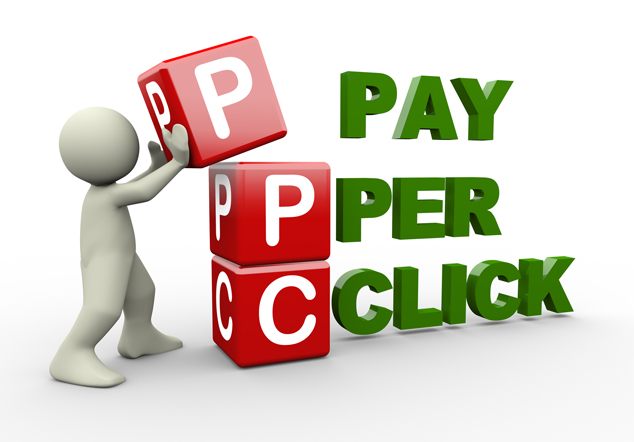
Pay-Per-Click (PPC) is a digital advertising model where advertisers pay a fee each time their ad is clicked. It's a cost-effective way to drive targeted traffic to websites, especially when combined with a well-optimized landing page.

🔍 How PPC Works

In PPC advertising, advertisers bid on keywords relevant to their target audience. When users search for those keywords, the search engine displays ads related to them. Advertisers pay a predetermined amount when their ad is clicked. This model is commonly used on platforms like Google Ads, Facebook Ads, and LinkedIn Ads. 


💡 Key Features of PPC Advertising

  • Keyword Targeting: Selecting relevant keywords ensures your ads appear to users interested in your offerings.

  • Ad Extensions: Enhance your ads with additional information like phone numbers, site links, and customer reviews to improve visibility.

  • Quality Score: Search engines assign a quality score to ads based on relevance, click-through rate, and landing page quality. Higher quality scores can lead to lower costs per click.

  • Ad Scheduling: Control when your ads appear to maximize effectiveness by targeting specific times and days. 

  • Remarketing: Reach users who have previously visited your site, increasing the chances of conversion. 


✅ Benefits of PPC Advertising

  • Immediate Results: PPC ads can generate traffic almost instantly once the campaign is live. 

  • Targeted Advertising: Advertisers can target specific demographics, locations, and times of day to reach their ideal audience.

  • Cost Control: PPC allows for precise budget management, enabling advertisers to set daily and monthly spending limits. 

  • Measurable ROI: PPC campaigns provide detailed analytics, making it easy to track performance and calculate ROI.

  • Enhanced Brand Visibility: Even if users don’t click on the ads, appearing at the top of search results can boost brand awareness.


⚠️ Challenges in PPC Advertising

  • Click Fraud: Fraudulent clicks can deplete an advertiser's budget without generating genuine interest. Search engines implement automated systems to guard against such activities.

  • Competitive Bidding: In highly competitive industries, the cost per click can escalate, affecting the return on investment. 


📈 Getting Started with PPC

To launch a successful PPC campaign:

  1. Define Goals: Determine what you want to achieve, such as increasing sales or generating leads. 

  2. Choose Platforms: Select platforms that align with your target audience, like Google Ads or Facebook Ads. 

  3. Set Budget: Establish a daily or monthly budget that aligns with your marketing objectives. 

  4. Create Ads: Develop compelling ads with clear calls to action. 

  5. Monitor and Optimize: Regularly review performance metrics and adjust campaigns to improve results.


PPC advertising offers a flexible and measurable approach to digital marketing, allowing businesses to reach their target audience effectively. By understanding its components and best practices, you can leverage PPC to achieve your marketing goals.

Pay Per Click Management Techniques

 What Is Pay Per Click 

Pay Per Click or PPC has really gotten popular over the years.  It's an incredible tool when used correctly.  If you're not sure what you're doing, it can be a big waste of money.  On this page, I will share the things that I have learned from trial and error, and from reading and studying the topic.  For those that are new let me explain how it works.  I'm sure you've done tons of searches on Google, Yahoo, Bing, etc.  When you type in the term you are looking for and hit search, you will get a list of results.  The results at the very top and down the right side will be paid ads.  The results down the left will be the natural results or the organic results.  With all the millions of searches being done every day, wouldn't it be great to have your ad at the top?  Well with PPC you can.  With PPC you are bidding on keywords that are relevant to your ad. 


Pay Per Click

If you sell lamps, then you would want to bid on keywords such as lamps for sale, bargain lamps, and quality lamps, and you get the picture.  When someone searches for one of these terms your ad will appear somewhere in the top or right side of the search result.  Where your ad appears depends on how much you bid for that keyword.  If you are the highest bidder you will be at the top left.  If you are the lowest you might not appear until the second page of the results.  Sounds a bit confusing at first but it's not. 

The reason this is a great tool is it lets you target the keywords you will bid on, you create your ads based on these keywords, and you only pay if someone clicks on your ad.  You also get to set your budget.  You can decide that the most you will pay each time your ad is clicked on is .24 cents.  You can also set a limit of $5.00 dollars a day.  When your limit is up your ads will stop displaying for the rest of the day.  If your going to spend money on advertising then this is a great way to go.

Pay Per Click Management Techniques:

Many clients believe that it is relatively easy to manage a Google Ad words account. When using Google's Starter Edition account, this may well be the case. But when we factor in Google's philosophy on Ad Placement, being that the number one position is the best place to be, then there may be a conflict of interests.

PAY PER CLICK MARKETINGGoogle may be correct that the most clicks will be achieved when positioned at number one, however, this does not necessarily mean that the client will get the best return on investment (ROI).

Contrary to popular belief, advertising in Google Ad Words is not all about how big your budget is. Google Ad Words is a very sophisticated system in that it will reward you if your products/services are more relevant than your competitors to any given search phrase.

Google Ad Word rates its ads on the ‘quality score’ that they achieve. This ‘quality score’ is a ranking system devised by Google to rank all advertisers equally, even if one advertiser's budget is much higher than another advertiser's. However, you must provide quality content/products/services and an optimized Ad Words account in order to get a higher ‘quality score’.The quality score takes into account many factors. These factors include:

Click Through Rate (CTR) – This is equal to the number of clicks divided by the number of impressions.

Max Cost Per Click (CPC) – This is the maximum bid placed on any particular keyword.
Ad Text – The relevancy of the ad text in relation to the keyword phrase typed into the search engine.
Landing Page – The relevancy of the content on the landing page (where the ad points the user to) to the keyword used and the ad clicked on.

Max CPC CTR Quality Score Ad Position


Below is an example that shows the placement of ads belonging to four different advertisers when we take into account their CTR, max CPC, and Quality Score:


Max CPC
CTR
Quality Score
Ad Position
Advertiser 1
0.55
5.8
3.19
1
Advertiser 2
2.05
1.5
3.06
2
Advertiser 3
3.80
0.6
2.28
3
Advertiser 4
1.20
1.8
2.16
4
As you can see from the example above, Advertiser 1 is actually spending the least amount, while still achieving the top advertising position, thanks to a high CTR, and thus the highest quality score. Although Advertiser 3 is spending the most, he only achieves 3rd position because his Ad Words account is poorly optimized, having the lowest CTR out of the competing advertisers. From this, you can see how important it is to maintain a high-quality score to achieve the best ROI.

Here are key Pay-Per-Click (PPC) management techniques that are essential for running high-performing campaigns across platforms like Google Ads, Bing Ads, and social media:


🔍 1. Thorough Keyword Research

  • Use tools like Google Keyword Planner, SEMrush, or Ahrefs.

  • Focus on high-intent keywords.

  • Use long-tail keywords for cheaper CPC and better targeting.

  • Organize keywords into tight, themed ad groups.


🚫 2. Negative Keyword Management

  • Regularly add irrelevant or underperforming search terms as negative keywords.

  • Helps prevent wasted ad spend and improves CTR.


📝 3. Compelling Ad Copy

  • Use attention-grabbing headlines and emotional triggers.

  • Include benefits, not just features.

  • Use strong CTAs (e.g., “Get a Free Quote,” “Shop Now”).

  • A/B test ad variations.


📱 4. Ad Extensions Optimization

  • Sitelinks, Callouts, Structured Snippets, Call Extensions, etc.

  • Improve ad real estate and click-through rate (CTR).

  • Tailor extensions to different ad groups or campaigns.


📊 5. Conversion Tracking & Analytics

  • Use Google Tag Manager to set up conversion tracking.

  • Link Google Ads with Google Analytics.

  • Monitor metrics like:

    • CTR

    • CPC

    • CPA

    • ROAS

    • Impression Share


🎯 6. Audience Targeting & Segmentation

  • Use demographic, geographic, and device targeting.

  • Leverage in-market and custom intent audiences.

  • Use remarketing lists to re-engage past visitors.


💡 7. Landing Page Optimization

  • Match landing page content to ad copy and keywords.

  • Improve load time and mobile responsiveness.

  • Include clear CTAs and trust signals (reviews, guarantees).

  • A/B test headlines, images, and forms.


🔄 8. Bid Strategy Management

  • Use automated bidding strategies (e.g., Target CPA, ROAS) if appropriate.

  • Adjust bids based on performance by:

    • Device

    • Location

    • Time of day

    • Audience segment


📅 9. Routine Performance Audits

  • Weekly or bi-weekly checks for:

    • High-cost/low-converting keywords

    • Underperforming ads

    • Quality Score drops

  • Reallocate budget to best-performing campaigns.


🧠 10. Use of Scripts and Automation

  • Google Ads scripts for:

    • Budget alerts

    • Pausing low-performing keywords

    • Auto-adjusting bids

  • Rules and automated rules can simplify management.


Would you like a template for a PPC audit, a campaign optimization checklist, or help with a specific ad platform like Google Ads or Meta Ads?

SEO On Page Technique

Generally, H1 tags are reserved for your main page title, with subsequent headings (just like the ones I have used throughout this post) being issued H2, H3, etc. Search engines use these to determine what is important within your content. This is why keyword-rich headlines are more useful than generic ones. Make sure you write keyword-rich headings in the order of priority in H1, H2, and H3 title tags. They are used by many crawlers to differentiate important content.

ON Page SEO Services in Faridabad
XML Sitemap:- Many webmasters think that XML sitemap is useless in SEO. It is the important part of the website which help the website in indexing and making a website accessible to users and search engine crawler.

Image ALT Tag:- With the all on-page parts image alt tag also plays a very important role in website ranking. Search engine crawlers cannot read images without this tag. So we can say image alt helps the crawler to read about the image. It is also helpful to boost keyword ranking with images.

Using images within your content is a great way to make your site more visually appealing and break up boring chunks of text. You can utilize these images to help improve your site's SEO.
All your uploaded images have titles, so treat them just the same as your page titles. Including relevant keywords can help people find your site when searching on Google Images.
You can also include Alt Text and Descriptions for your images, making them even more useful with SEO.

Internal Linking: - People often think that the only links that count are those from other websites. While these links are important, they are not the only important links!

Placing links to your other website pages is a great way of improving your site and used properly, internal links can be a useful weapon in your SEO arsenal. Not only does it make it much easier for your visitors to navigate around your site and find all of your content, but it also ensures that your site gets properly crawled allowing the search engines to find all of your pages. It also helps to build the relevancy of a page to relevant keywords and phrases, whilst also helping to increase the Google Page Rank of your pages.

There are a number of different methods that you can use to improve your internal linking structure. The main being; content links and permanent navigation links.

ON Page SEO Services

Summary

These 8 techniques are just some of the ways that you can improve your on-page SEO. Anyone used independently of the others won’t make much difference to your site ranking, however, when used together, they can help to improve your site traffic.

They will help to get your pages working better, they will help to get your entire site crawled by search engine spiders, they will help increase the value of internal pages and they will build the relevancy of internal pages to specific keyword phrases.

On-Page SEO techniques are the foundation for helping search engines understand your website content and improving rankings. Here's a complete list of essential on-page SEO techniques to boost visibility, traffic, and engagement:

✅ 1. Title Tag Optimization

  • Include the primary keyword naturally.

  • Keep it under 60 characters.

  • Make it engaging and click-worthy.

  • Example:
    Good: Affordable SEO Services for Small Businesses | BrandName

✅ 2. Meta Description

  • Summarize the page content (up to 155–160 characters).

  • Include a call to action (e.g., “Learn more,” “Get a free quote”).

  • Incorporate target keywords naturally.

✅ 3. URL Structure

  • Keep URLs short, clean, and keyword-rich.

  • Use hyphens (not underscores) between words.
    Example: /seo-services/new-york

✅ 4. Heading Tags (H1–H6)

  • Use only one H1 tag per page (should include the main keyword).

  • Use H2–H6 to structure content for readability and SEO.

  • Organize content in a logical hierarchy.

✅ 5. Keyword Optimization

  • Naturally place the primary keyword in:

    • First 100 words

    • At least one subheading (H2 or H3)

    • Throughout the content (but avoid keyword stuffing)

  • Use LSI (Latent Semantic Indexing) keywords to add context.

✅ 6. Internal Linking

  • Link to other relevant pages on your site using descriptive anchor text.

  • Helps with crawlability, user navigation, and authority distribution.

✅ 7. External (Outbound) Linking

  • Link to reputable sources to back up claims or data.

  • Opens relationship-building opportunities and increases trust signals.

✅ 8. Image Optimization

  • Use descriptive file names and alt text with keywords.

  • Compress images to improve page speed (use tools like TinyPNG or WebP).

  • Add captions if helpful for users.

✅ 9. Mobile-Friendliness


✅ 10. Page Speed Optimization

  • Use tools like Google PageSpeed Insights, GTmetrix, or Lighthouse.

  • Techniques:

    • Minify CSS/JS/HTML

    • Use lazy loading for images

    • Enable browser caching

    • Use a CDN

✅ 11. Content Quality & Structure

  • Write unique, original content that provides real value.

  • Use bullet points, short paragraphs, and multimedia (videos, infographics).

  • Include FAQ sections to target featured snippets.

✅ 12. Schema Markup (Structured Data)

  • Add schema.org markup for:

    • Articles

    • Reviews

    • Products

    • FAQs

  • Helps generate rich snippets in search results.

✅ 13. User Engagement Optimization

  • Add clear CTAs (calls to action).

  • Use interactive content (quizzes, videos).

  • Reduce bounce rate with strong opening sections and related links.

Would you like a checklist PDF, an on-page SEO audit template, or help optimizing a specific page?

On Page SEO

Meta Description Tag:- Meta description is the HTML text which explains web page content. It increases the possibility of user clicks. This means to say it increases the click-through rates of web pages. The most favorable character limit for a meta description tag is 160-169 characters including space.

On Page SEO Optimization


Many people forget to include meta descriptions for their pages. These descriptions are an important place to include relevant keywords for your content, as these are used within the search results when your page is listed. For instance, if we continue to use the ‘Chocolate Cake Recipe’ example, then a good meta description for that page would include those keywords and related ones. So, “This easy chocolate cake recipe is possibly the most delicious, mouth-watering, chocolate cake ever made.” would be a great meta description to use, as it is relatively short, whilst containing a number of specific keywords.

Meta Keywords:- Meta keywords are the part which also important in on-page SEO. This part helps to boost keyword ranking in other famous search engines like Yahoo, Bing, MSN, Ask, etc. So we can say the appearance of meta keywords can increase the possibility of better ranking in other search engines.

For each of your pages, you can include a set of keywords in the form of meta tags. These should be all the relevant keywords of your content, which you will have researched previously.
I use a Word Press plug-in on my sites called ‘All In One SEO Pack’. This allows me to enter all of my meta tag keywords, meta description, and page title at the bottom of each of my posts before publishing. This simply inserts all of the information into your page HTML format for you, making your life a little easier.

SEO In Faridabad


URL Structure: - Including search engine-friendly URLs for each of your pages is highly recommended, as these bring better crawling. Shorter URLs seem to perform better in search engine results, however, that is not the only factor. URLs that include targeted keywords, also perform better. The location of these keywords can also be a major influence.

Heading Tag:- This tag represents the different sections of web page content. Head tag help search engine spider relevancy between heading tags and web page content. Including that, it also gives an idea to the user about web page content.

you should break up your content into smaller sections & paragraphs to make it easier for people to read. These sections can be given heading, which is where H1, H2, H3, H4, etc. tags are used.

✅ What is On-Page SEO?

On-Page SEO (also called on-site SEO) refers to the practice of optimizing individual web pages to rank higher and earn more relevant traffic in search engines. It involves improving both the content and the HTML source code of a page.

🧠 Why Is On-Page SEO Important?

  • Helps search engines understand your content

  • Boosts rankings for relevant queries

  • Improves user experience, leading to better engagement and conversions

🔧 Core Components of On-Page SEO

1. Title Tags

  • Include your main keyword near the beginning

  • Keep it under 60 characters

  • Unique title for every page

2. Meta Descriptions

  • Summarize the page in 155–160 characters

  • Include keywords and a clear call to action

  • While not a ranking factor, it improves CTR

3. URL Structure

  • Short, descriptive, and keyword-rich

  • Use hyphens to separate words
    Example: www.example.com/on-page-seo-tips

4. Header Tags (H1, H2, H3...)

  • Use one H1 tag per page (main title with keyword)

  • Break content using H2/H3 subheadings

  • Makes content scannable and well-structured

5. Keyword Placement

  • Place target keywords:

    • In the first 100 words

    • In headers

    • Naturally throughout content (avoid stuffing)

    • Use LSI keywords to provide context

6. High-Quality Content

  • Original, in-depth, and relevant

  • Solve the user’s search intent

  • Aim for topical authority using examples, FAQs, and detailed explanations

7. Internal Linking

  • Link to related pages using descriptive anchor text

  • Improves crawlability and user retention

8. External Linking

  • Link to trusted sources to add credibility

  • Avoid linking to low-quality or spammy sites

9. Image Optimization

  • Use descriptive filenames

  • Add alt text with relevant keywords

  • Compress images to improve page speed

10. Mobile Responsiveness

  • Ensure the site works well on all devices

  • Use a responsive design

11. Page Speed

  • Fast-loading pages rank better and reduce bounce rates

  • Optimize with:

    • Minified code

    • Compressed images

    • Caching

    • CDN (Content Delivery Network)

12. Schema Markup (Structured Data)

  • Add schema.org tags for:

    • FAQs

    • Products

    • Reviews

    • Articles

  • Helps earn rich snippets in Google results

🧰 Bonus On-Page SEO Tools

  • Yoast SEO / RankMath (WordPress)

  • Google Search Console

  • Screaming Frog SEO Spider

  • Surfer SEO / Clearscope / Frase (for content optimization)

Would you like:

  • A downloadable on-page SEO checklist?

  • An audit of your existing webpage?

  • Help writing optimized content for a specific keyword?

Let me know how you'd like to proceed!

On Page Search Engine Optimization Techniques

There are two main factors in search engine optimization. On-page Optimization and Off-page Optimization. Both factors are connected with each other for website search engine ranking. It is very important to optimize both techniques for better website ranking in search engines. On-page optimization helps us to create website search SE0 and is search engine friendly, off-page assists us to create quality backlinks for great ranking.

On Page Search Engine Optimization Techniques


Some page On Page Search Engine Optimization techniques and their output:- 

Meta Title Tag:- Meta title tag describes the web page content. It is the most important part of page SEQ. Title tag with the appearance of keywords makes it easy to keywords ranking. We can find titles in three places external websites, search engine result pages, and browsers.

Character Limit: - Google prefers a character limit of less than 70 characters including space. With this character limit Google displays in search results.

Title Structure: - <title>Primary Keyword I Secondary Keyword I Brand Name </title>

SEO On-page Optimization

Your page titles are one of the most important SEO factors on your site. Each of your pages & posts should have its own unique title, which includes the main keywords for that page.
For example, you could write a blog post about a new chocolate cake recipe that you have tried. It is therefore vitally important that you include ‘Chocolate Cake Recipe’ within your post title, perhaps “Easy Chocolate Cake Recipe” or “ Chocolate Cake Recipe for kids”, etc.

This way, whenever someone searches for Chocolate Cake Recipes in a search engine, your post has a better chance of showing up because you have included those keywords.

Here are the most effective On-Page Search Engine Optimization (SEO) techniques to improve your site's visibility, ranking, and user experience:

On-Page SEO Techniques

1. Optimize Title Tags

  • Place the main keyword near the beginning.

  • Keep under 60 characters.

  • Make it compelling to boost click-through rates (CTR).

  • Example: Best Digital Marketing Services | YourBrand

2. Craft Effective Meta Descriptions

  • Use 155–160 characters.

  • Include the target keyword and a call-to-action (CTA).

  • Helps improve CTR even though it’s not a direct ranking factor.

3. Use SEO-Friendly URLs

  • Keep URLs short, descriptive, and keyword-rich.

  • Use hyphens, not underscores.

  • Example: /on-page-seo-techniques

4. Use Header Tags Properly (H1–H6)

  • One H1 tag per page (usually the page title).

  • Use H2–H3 tags to organize content logically.

  • Include secondary keywords in subheadings where appropriate.

5. Keyword Optimization

  • Use your target keyword in:

    • Title tag

    • Meta description

    • First 100 words

    • One or more subheadings

    • Throughout content (naturally)

  • Include LSI (Latent Semantic Indexing) keywords for depth.

6. Optimize Images

  • Use descriptive filenames and ALT tags.

  • Compress images for faster load times.

  • Use next-gen formats (e.g., WebP).

7. Internal Linking

  • Link to relevant pages on your own website.

  • Helps search engines understand site structure.

  • Distributes link equity and keeps users engaged.

8. Outbound (External) Linking

  • Link to reputable, authoritative sources.

  • Improves credibility and helps with topic association.

9. Mobile Responsiveness

10. Improve Page Speed

  • Use tools like Google PageSpeed Insights, GTmetrix, or Lighthouse.

  • Optimize by:

    • Minifying CSS, JS, HTML

    • Enabling compression

    • Using a CDN

    • Lazy-loading images

11. Create High-Quality, Engaging Content

  • Write for user intent.

  • Make it original, informative, and well-organized.

  • Use multimedia (images, videos, infographics) to enrich content.

  • Keep paragraphs short and readable.

12. Schema Markup (Structured Data)

  • Use schema.org to add:

    • Article

    • FAQ

    • Product

    • Review

    • Event

  • Increases chances of getting rich results/snippets.

13. User Engagement Signals

  • Reduce bounce rate by:

    • Improving load speed

    • Making content skimmable

    • Adding internal links and multimedia

  • Encourage actions like comments, shares, or signups.

14. Optimize for Featured Snippets

  • Use lists, tables, FAQs, and how-to formats.

  • Answer questions clearly and early in the content.

Would you like:

  • A free on-page SEO checklist (PDF)?

  • Help with auditing your webpage?

  • Content optimization tips for a specific keyword or page?

Let me know how I can support your SEO goals!